








Read Time:4 Minute, 6 Second
The summer sun in Tokyo was unforgiving, beating down from 10.30am to 12.15pm as players from Tokyo Verdy and Ventforet Kofu went through their warm-ups on a proper, well-maintained natural grass pitch. A few staff members wiped the sweat from their brows, while the sharp sound of passes and the bark of instructions cut through the heavy morning air. On one touchline stood two familiar figures in green — Ratna Suffian and Miur Rafik Taha — deep in discussion with their fellow Tokyo Verdy coaches. On the opposite side, dressed in Kofu colours, was Nazri Nasir, watching intently as his side moved through tactical drills. It wasn’t a packed stadium or a high-profile match, but for Junpiter Futbol, this was a rare and meaningful sight — all three Singaporean coaches, plying their trade in Japan, on the same pitch.
Fresh from covering the Kobe Dreams vs World Dreams legends match — an emotional fixture held in Kobe to commemorate the 30th anniversary of the Hanshin Awaji earthquake — Junpiter Futbol had packed up the cameras and boarded a train bound for Tokyo. Nearly five hours later, we arrived in the capital just in time for this unique training match between Tokyo Verdy and Ventforet Kofu that brought together all three of our country’s coaching representatives in Japan.
This wasn’t just another friendly on the pre-season calendar. It was a showcase of the Coach Overseas Attachment (COA) programme in action — an initiative under the Unleash The Roar! (UTR!) project designed to immerse Singapore coaches in high-performance environments abroad. This year’s batch features familiar names: Geylang International women’s head coach Ratna Suffian and Singapore Sports School coach Miur Rafik Taha with J1 side Tokyo Verdy, and former national captain Nazri Nasir serving as assistant coach at J2 outfit Ventforet Kofu.


Miura (photo-top), Ratna (photo-centre) and Nazri (photo-bottom)
involving in first team training
For Ratna and Miur, the past three months in Tokyo have been an intense crash course in Japanese football culture. They’ve had to adapt not only to the speed and intensity of the game but also to the nuances of communication and day-to-day routines. Ratna admitted that language was an early hurdle, but the pair have picked up enough Japanese to navigate training sessions and casual exchanges. Having Tokyo Verdy’s past experience with Noh Alam Shah and Isa Halim also helped the club understand how to integrate Singaporean coaches into their setup, making the adjustment smoother.
Miur has been fascinated by the relentless pace and physical demands of the Japanese game. Watching players go through high-intensity drills and observing the level of detail in each session has given him plenty of ideas to bring home. “Every training match here is played like a competition,” he noted, pointing out that the quality of preparation and player mentality is on another level compared to Singapore.
Over in Kofu, Nazri’s attachment has been equally immersive. Working closely with head coach Shinji Ohtsuka, he has been part of everything from tactical planning to matchday execution. The former Young Lions coach is candid about the difference in standards, estimating that the jump in intensity, quality, and mental strength is easily more than 50 per cent compared to back home. He has also noticed subtle cultural traits in the game, such as referees allowing matches — even at youth level — to flow despite heavy challenges, something less common in Singapore.

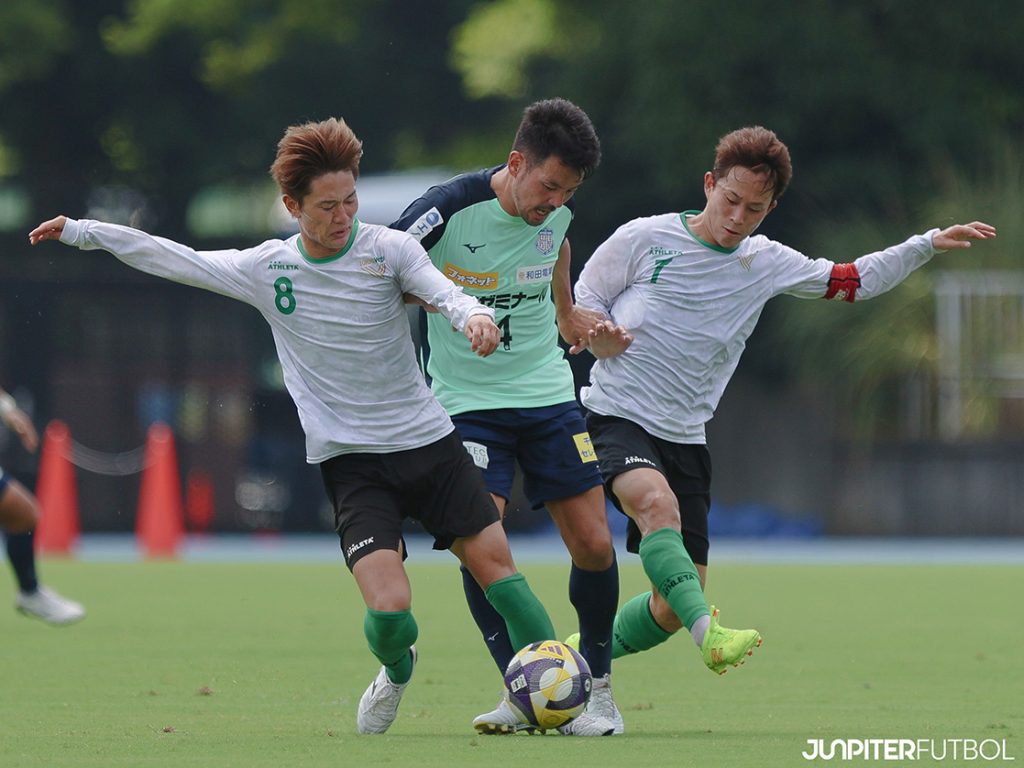

Tokyo Verdy & Ventforet Kofu having a training match
The match between Tokyo Verdy and Ventforet Kofu was therefore more than just a training fixture; it was a rare chance for the three coaches to meet on opposite sides of the pitch in their new environments. From the sidelines, you could sense the mutual respect as they exchanged quick greetings before slipping back into their professional roles.
Summer in Japan has been unrelenting, with temperatures soaring to nearly 40°C, and all three admitted they’re looking forward to the cooler months ahead. Yet the heat has done little to dim their enthusiasm for the opportunity. The lessons they’re learning — in coaching methodology, player management, and cultural adaptation — are exactly what the COA programme was designed to deliver.
For Junpiter Futbol, making the long trip from Kobe to Tokyo wasn’t just about ticking another match off the coverage list. It was about telling a story of growth, perseverance, and ambition — three Singaporean coaches stepping out of their comfort zones and proving themselves in one of Asia’s most competitive footballing landscapes. Their stints in Japan are temporary, but the knowledge and experience they will bring home could have a lasting impact on Singapore football for years to come.
Thank you Tokyo Verdy for hosting us. Thank you UTR! for facilitating the interview. Special mention to SingaCup, Asia’s Premier International Youth Football Tournament, for making this trip possible.

Happy
0 %

Sad
0 %

Excited
0 %

Sleppy
0 %

Angry
0 %

Surprise
0 %
Please follow and like us:


