








Read Time:6 Minute, 48 Second
Our visit to Shimizu S-Pulse wasn’t just another stop on a football itinerary—it felt like stepping into the soul of Japanese football. Based in Shizuoka, a city long regarded as the football kingdom of Japan, Shimizu S-Pulse isn’t just a club; it’s a community heartbeat. Formed in 1991 as one of the original J.League teams, S-Pulse was unique—born not from a corporation, but from the people. Backed by local citizens and businesses, the club quickly became a cultural symbol of Shizuoka.
The city itself is deeply steeped in football tradition. Many of Japan’s football legends—like Hidetoshi Nakata, Shinji Ono, Shinji Okazaki, Masashi Nakayama and the timeless King Kazu—hail from Shizuoka. Schools in this region have also dominated the prestigious National High School Football Championship, reinforcing the city’s status as a talent factory. As football lovers, visiting Shizuoka had always been a dream.

“Football” barriers along the road in Shizuoka city
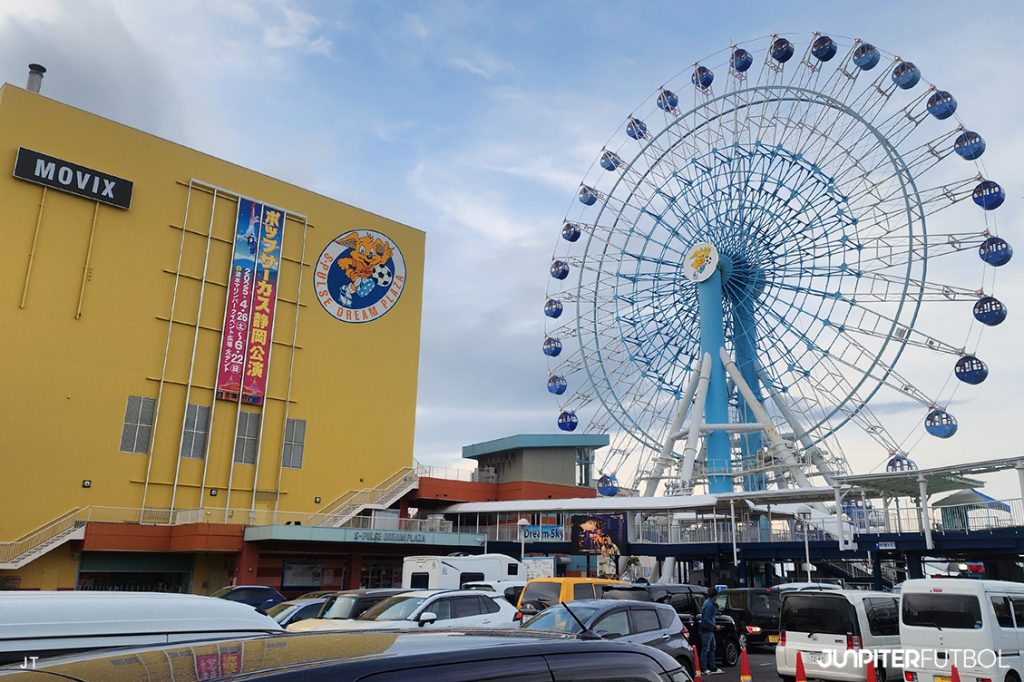
S-Pulse Dream Plaza & Dream Sky (Ferris Wheel)
The moment we landed in Tokyo, we made a beeline for Shizuoka via Shinkansen. From the instant I stepped out of the train, I could feel football all around me. Orange-themed vending machines bearing the S-Pulse crest dotted the streets, while local bus stops featured cheerful posters of children playing football with Mount Fuji in the background. It felt like everyone in the city knew about S-Pulse—as if football was the only recreation that mattered. The community’s devotion was visible in every corner: buildings proudly displayed S-Pulse banners, roadside concrete barriers were shaped like footballs, and the iconic Ferris wheel at S-Pulse Dream Plaza spun with club logos emblazoned on every carriage. Even commercial spaces—from shopping centres to small eateries—proudly displayed match posters and countdowns to upcoming fixtures.
The most striking moment came at Shizuoka Station, where a central brochure rack offered not only the full 2025 season player list and fixture schedule for S-Pulse, but also a similar one for J2’s Fujieda MYFC. This wasn’t just a fan-friendly gesture—it was a clear signal that in Shizuoka, football isn’t a pastime. It’s a way of life.

S-Pulse Academy players in training
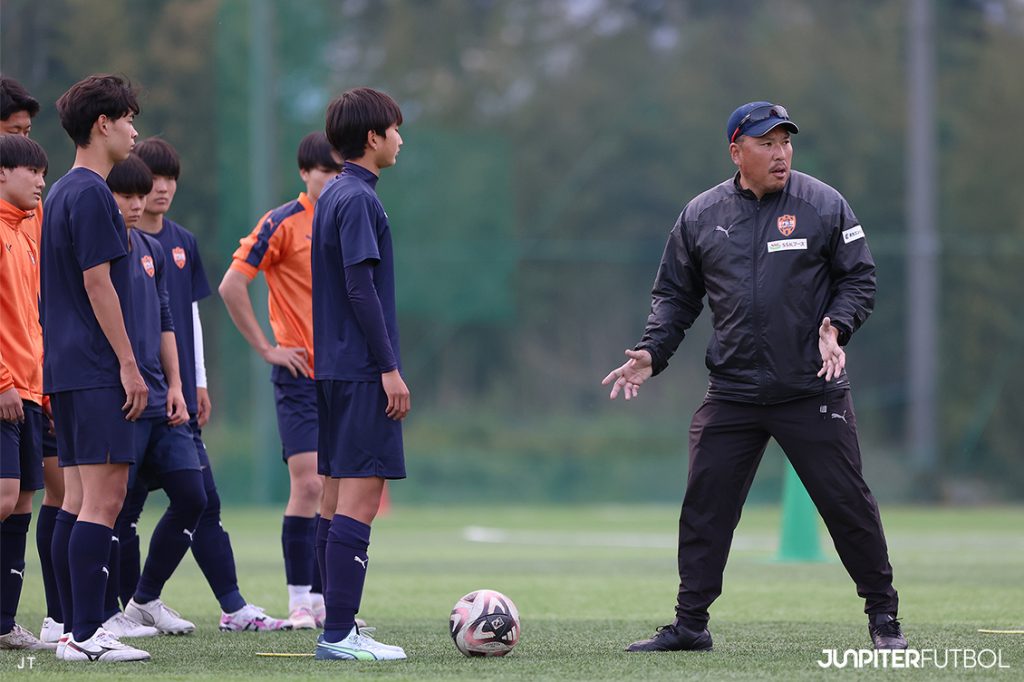 S-Pulse Academy coaches working with the young players
Coach Hiraoka overseeing the Academy training
A highlight of the visit was a stop at the S-Pulse clubhouse, where I was warmly hosted by Coach Hiraoka, who now oversees the academy. It wasn’t just the polite hospitality typical of Japan—Coach Hiraoka was someone familiar. Back in 2007–2008, he served as head coach of Albirex Niigata Singapore, and we reminisced about those days, including my time assisting at their soccer schools after earning my AFC C License. While he admitted he hadn’t followed Singapore football closely since returning to Japan, he was aware of Lion City Sailors’ recent rise.
The S-Pulse clubhouse was abuzz with activity. It’s the base for the first team staff and club operations—housing about 100 staff members, excluding players. The academy functions from a separate building. Just as I was preparing to leave, I spotted a figure that made my heart skip—Daisuke Ichikawa. Once the youngest ever to don the Japan jersey at 17, there he was walking past me. I was stunned but managed to ask for a photo, a memory I’ll cherish forever.
I was lucky enough to catch the U-15 and U-18 academy teams in action, though an unexpected downpour (lightning) cut their training short. Still, watching these young talents—even briefly—reinforced the strong developmental culture at the club.

Merchandise Store in S-Pulse Dream Plaza with some Exhibits (L2)
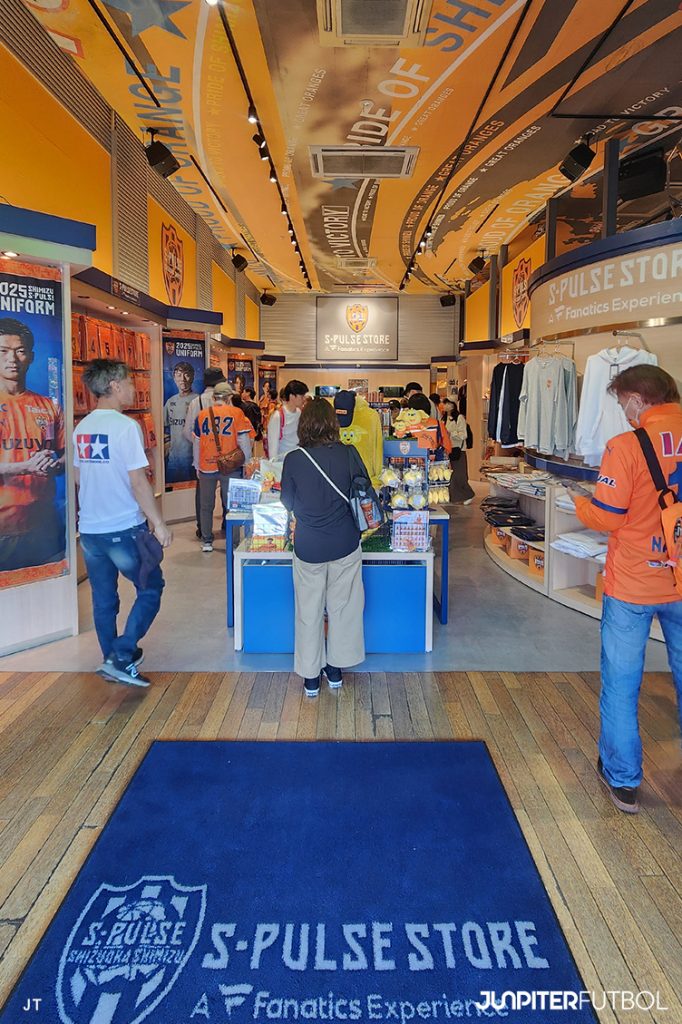
S-Pulse Official Merchandise Store (near S-Pulse Dream Plaza)
Like most of my football trips, there wasn’t much time for sightseeing or shopping. My go-to? The club’s official merchandise stores. This brought me to the S-Pulse Dream Plaza, a seaside shopping complex with multiple floors of dining, entertainment, and football. The Official S-Pulse Store nearby was packed with seasonal merchandise—jerseys, scarves, accessories—all in orange. One quick tip: if you spot something you like, grab it immediately. By the 10th match of the season, last season’s items were nearly gone, with only extreme sizes left.
Match day was the pinnacle. S-Pulse’s home, IAI Stadium Nihondaira, sits on a hill without a direct train line, but the club runs an efficient shuttle bus service. We took it from town—buses came every few minutes, cost just ¥310–600 depending on your pickup point, and took us on a scenic ride lined with blooming sakura.
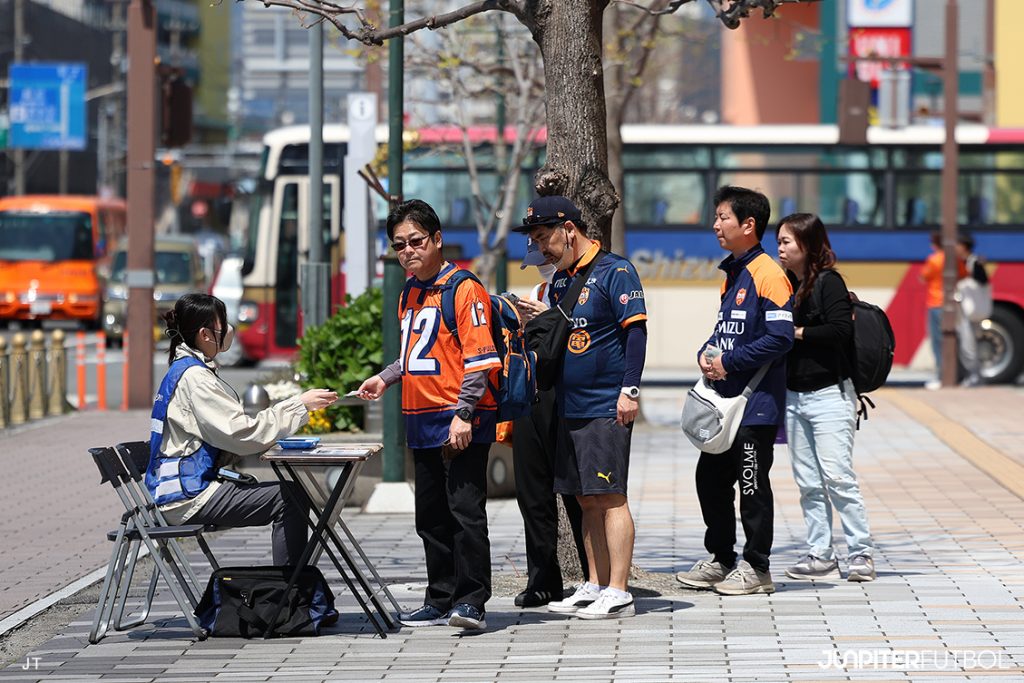
S-Pulse supporters purchasing tickets for shuttle bus to Stadium

Football supporters arriving at IAI Stadium Nihondaira

Football supporters gathering at Stadium 2 hours prior to kickoff
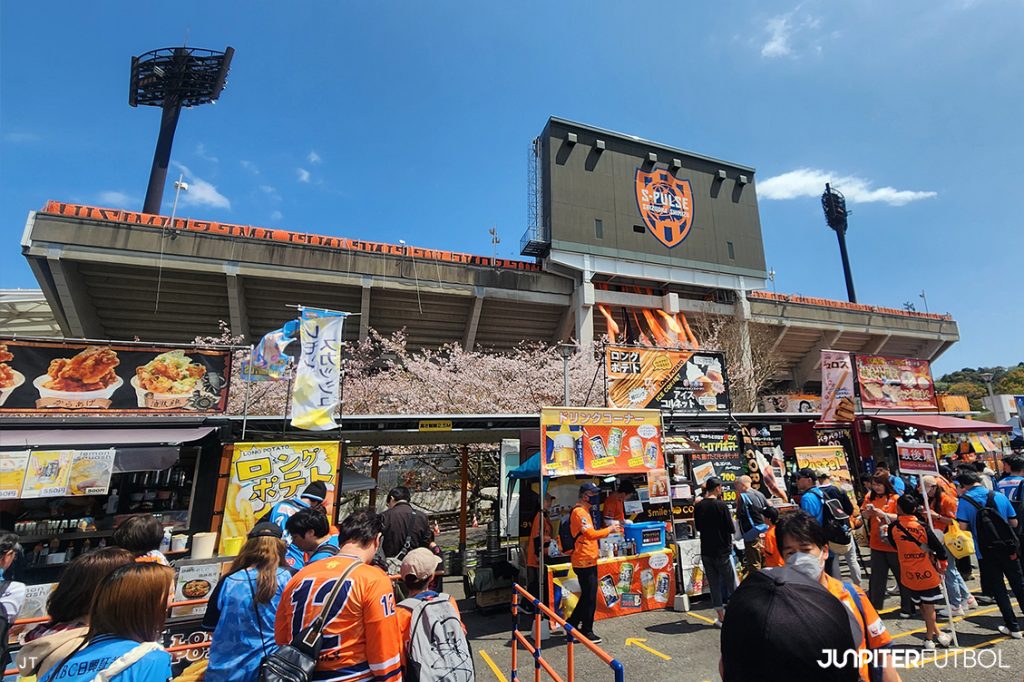
Food stores right outside Stadium
At IAI Stadium Nihondaira, the weather was cloudy, which meant we couldn’t catch a glimpse of Mount Fuji—something the stadium is famously known for. But that didn’t dampen the atmosphere one bit. We arrived two hours before kickoff, and the stadium grounds were already buzzing with energy. The area outside was transformed into a vibrant football festival. More than ten food stalls lined the perimeter, each offering something different—from grilled yakitori, steaming bowls of udon, freshly fried karaage, to local specialties like Shizuoka oden and matcha desserts. It wasn’t just about grabbing a quick bite; families with young kids, groups of friends, elderly couples, and even solo fans were gathered around high tables, chatting and laughing while enjoying their meals.
Amid the crowd, a few fans approached us—recognising us as media from our bright yellow J.League PHO (photographer) bibs. They asked for a photo, and we happily obliged. It was heartwarming to see how open and passionate the fans were. Though the cherry blossoms were past their peak, a few sakura trees around the food area still clung to their petals, adding a soft pink hue to the scene. And right behind it all, standing proudly in the background, was the stadium—majestic, timeless, and very much alive with the heartbeat of Shizuoka. It was just too beautiful. A perfect harmony of football, food, and the fleeting charm of spring.
At the media counter, we collected our passes and photographer bibs. The staff, a mix of club personnel and agency reps, impressed us with a thoughtful offer: taxi service back to our hotel post-match. True to their word, our driver was waiting right on schedule. In a country known for efficiency, this still stood out—an example of how much the media is respected in the Japanese football scene.
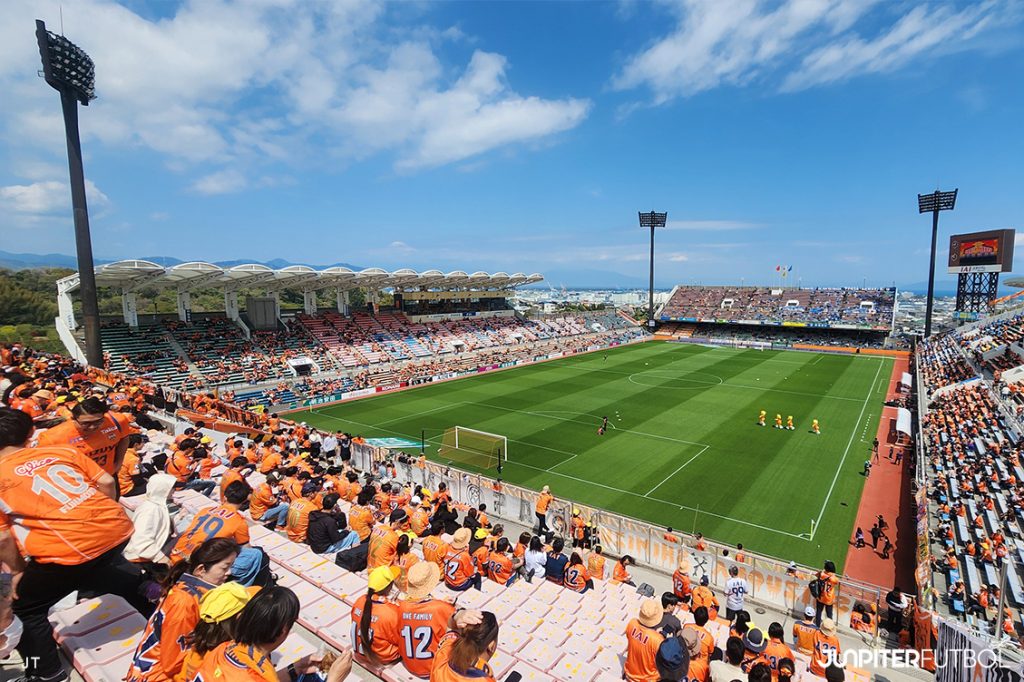
Top view of IAI Stadium Nihondaira

Shimizu S-Pulse players warming up in front of 17,629 fans
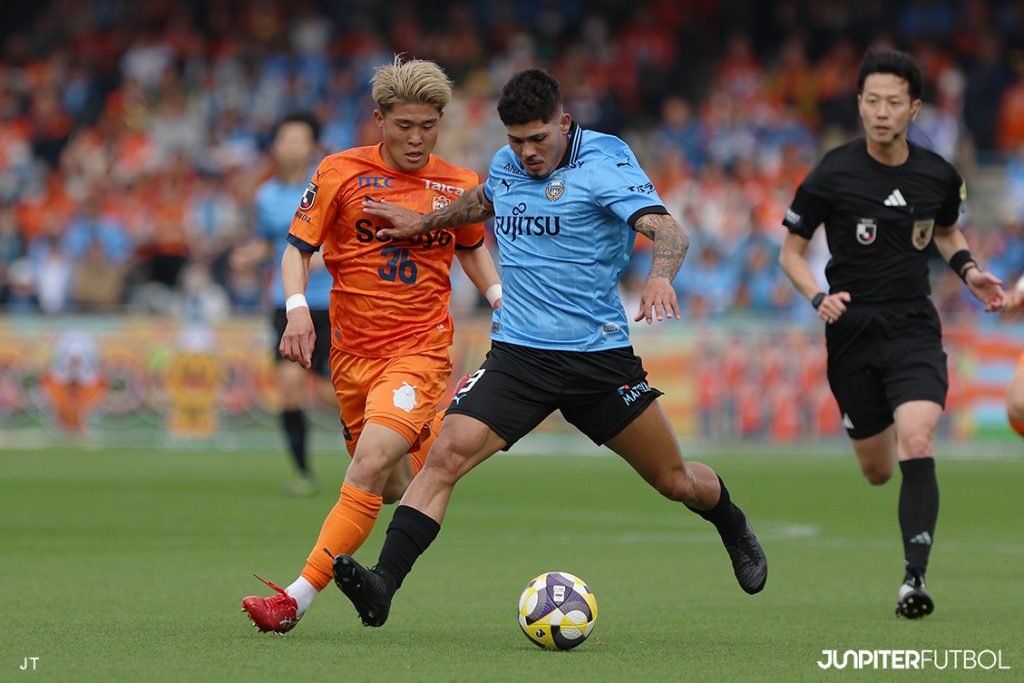
J.League: Shimizu S-Pulse vs Kawasaki Frontale
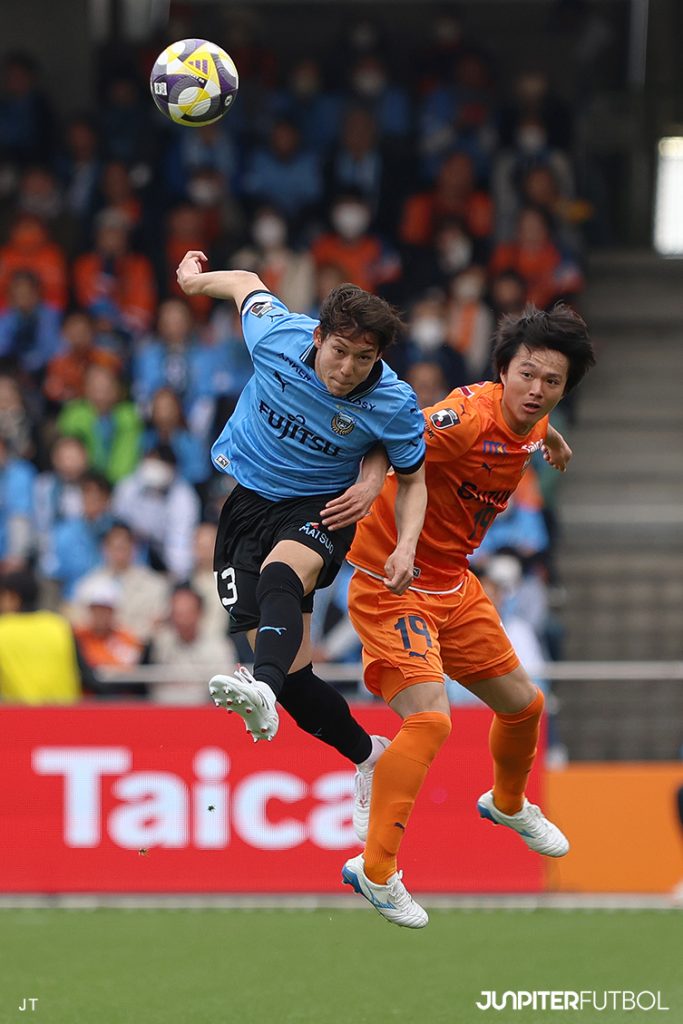
J.League: Shimizu S-Pulse vs Kawasaki Frontale
The match itself was thrilling. On paper, Kawasaki Frontale had the upper hand, but S-Pulse drew first blood with a converted penalty. Moments later, Frontale equalised, and the match ended 1–1. But beyond the goals, there were magic moments—fans flocked to the sidelines just to catch a glimpse of former Japan international Takashi Inui doing warm-up juggling. I was lucky enough to witness it live.
In summary, after so many trips to the high-paced energy of Tokyo or Osaka, Shizuoka offered something different. It wasn’t just a visit—it was an immersion into a city where football is woven into everyday life. The club’s slogan, One Family, couldn’t be more accurate. Here, everyone—from the bus stop poster designers to the school kids in orange—bleeds S-Pulse. Even though I was only here for two short days, the color orange now pulses through me, too. And maybe that’s exactly what S-Pulse means: Shizuoka, Shimizu, Supporter, Soccer—sharing the same heartbeat.
Thank you J.League and Shimizu S-Pulse for hosting us. Special mention to SingaCup, Asia’s Premier International Youth Tournament for making this trip possible.

Happy
100 %

Sad
0 %

Excited
0 %

Sleppy
0 %

Angry
0 %

Surprise
0 %
Please follow and like us:


