







Read Time:6 Minute, 39 Second
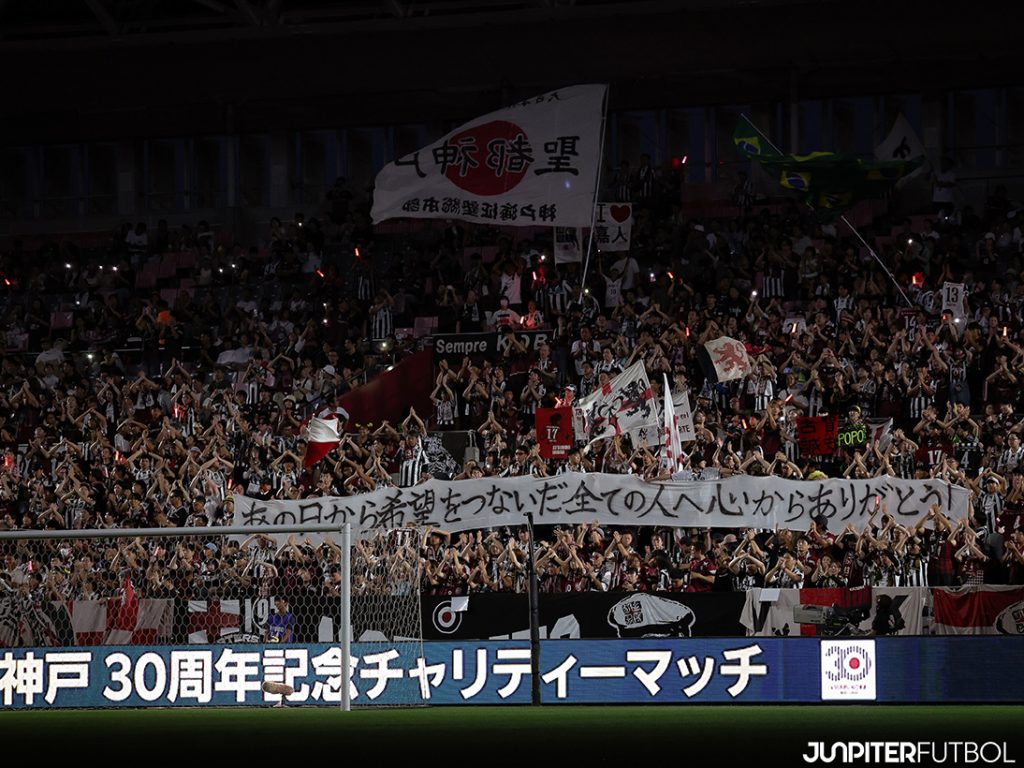
When we flew into Kobe, Japan, we knew we were coming for more than just a football match. This wasn’t your average exhibition game. The Kobe Dreams vs World Dreams match was organized to commemorate the 30th anniversary of the Hanshin Awaji earthquake, a devastating tragedy in 1995 that took the lives of over 5,000 people. The event was more than football; it was remembrance, resilience, and community coming together through the beautiful game. And fittingly, it took place at Noevir Stadium – the proud home of Vissel Kobe, J.League champions in both 2023 and 2024.
The match was scheduled for a 7:30pm kickoff, and given the scorching Japanese summer heat, peaking near 40°C, we aimed to reach the stadium by 4:00pm, thinking we’d beat the crowd and get some early photos. But when we arrived, we were taken aback – the stadium was already buzzing with activity. Thousands of Kobe football fans had arrived long before us, and the passion was undeniable.
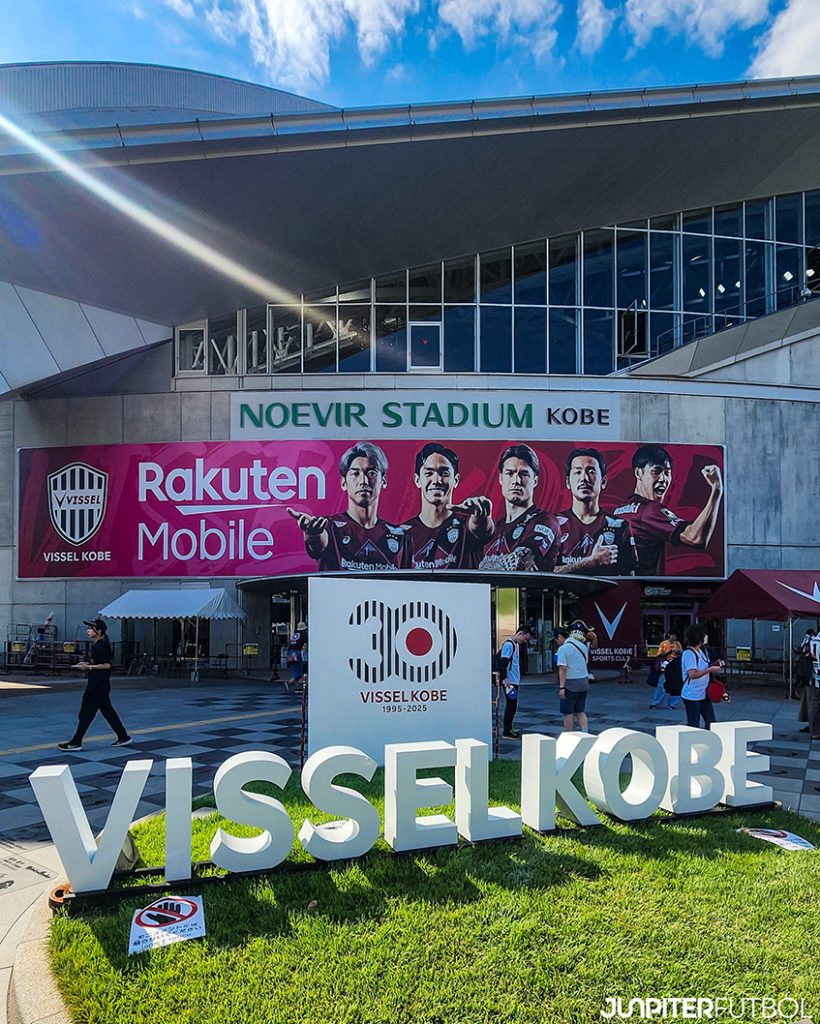
One of the first things that caught our eye was the massive merchandise booth, easily around 650 square meters in size, set up under a large white tent. The queue was like a winding snake, made up of over 300 fans, many of them patiently standing under the hot sun. What were they queueing for? A specially produced Vissel Kobe 30th Anniversary jersey, released just for the occasion. Priced at around ¥27,000 (approximately SGD 235), it wasn’t exactly cheap, but that didn’t seem to matter. Fans were eager to get their hands on this limited-edition piece of club history, and judging by the excitement on their faces, it was worth every yen.
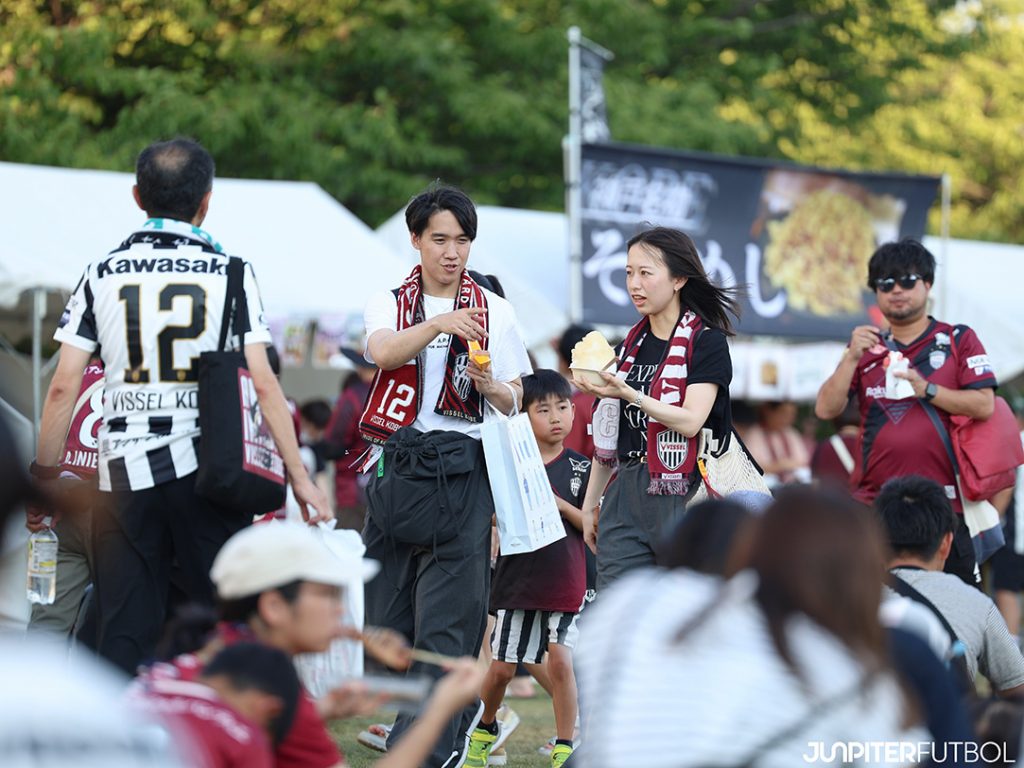
The atmosphere around the stadium was festive, almost like a carnival. Families with young kids roamed the grounds, some enjoying simple booth games, others taking photos around various fan zones. Quite a few even brought their own footballs to have a kickabout in the adjacent park. It wasn’t just a match, it was a community celebration.
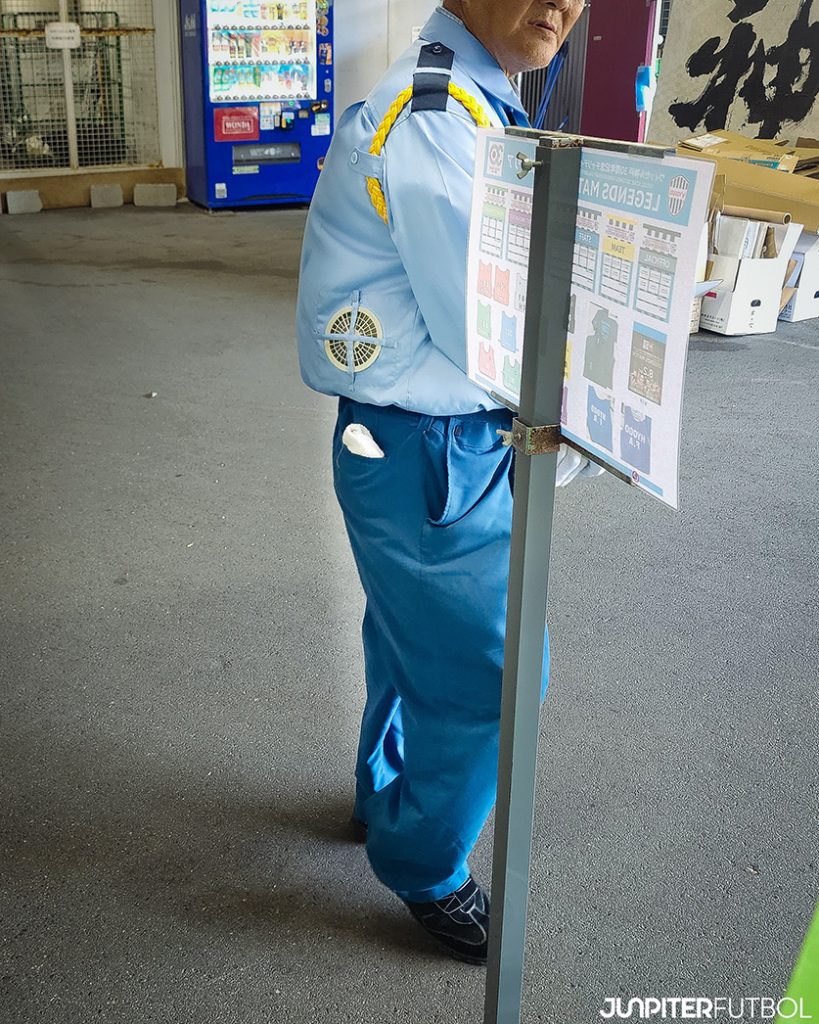
What impressed us even further was the efficiency and dedication of the event staff. Hundreds of security personnel were already deployed around the stadium, most of them senior citizens. At first glance, many appeared to be puffed up in their uniforms, and we wondered how they could endure such heat. It wasn’t until we got up close to collect our media passes that we realized their uniforms were equipped with built-in fans. These clever battery-powered (probably?) cooling fans circulated outside air inside the suits, helping keep them cool under the blazing summer sun. It was such a smart and thoughtful solution, another small but mighty example of Japan’s attention to detail.
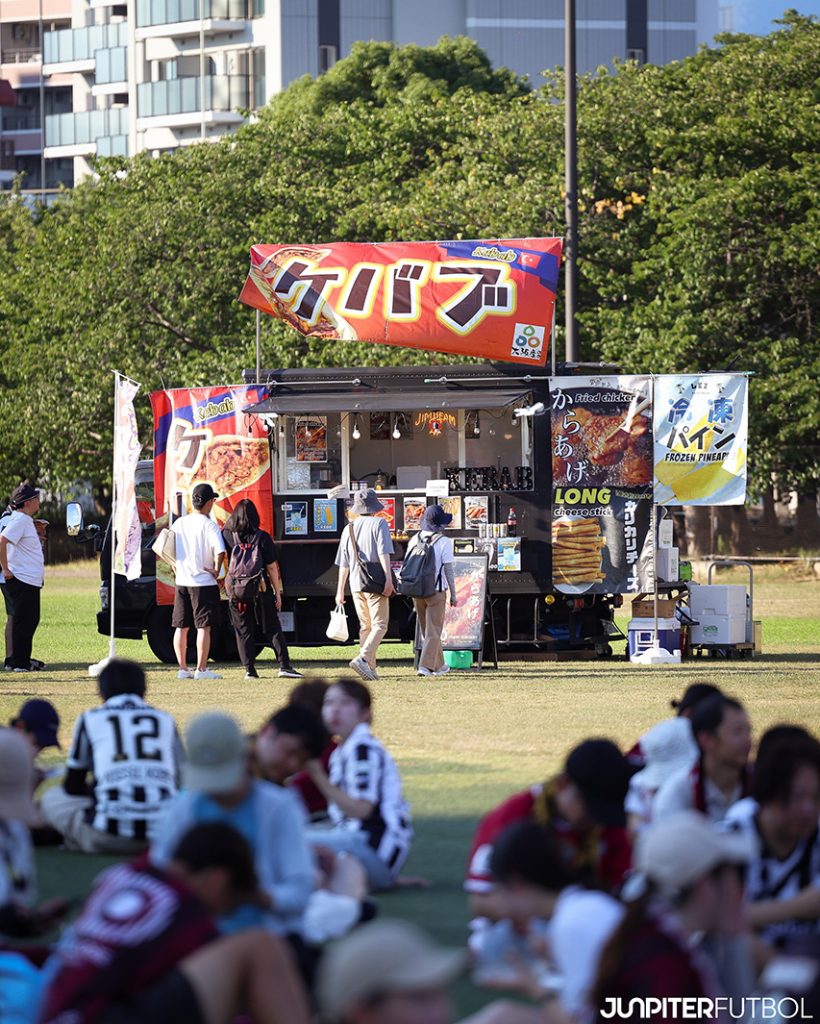
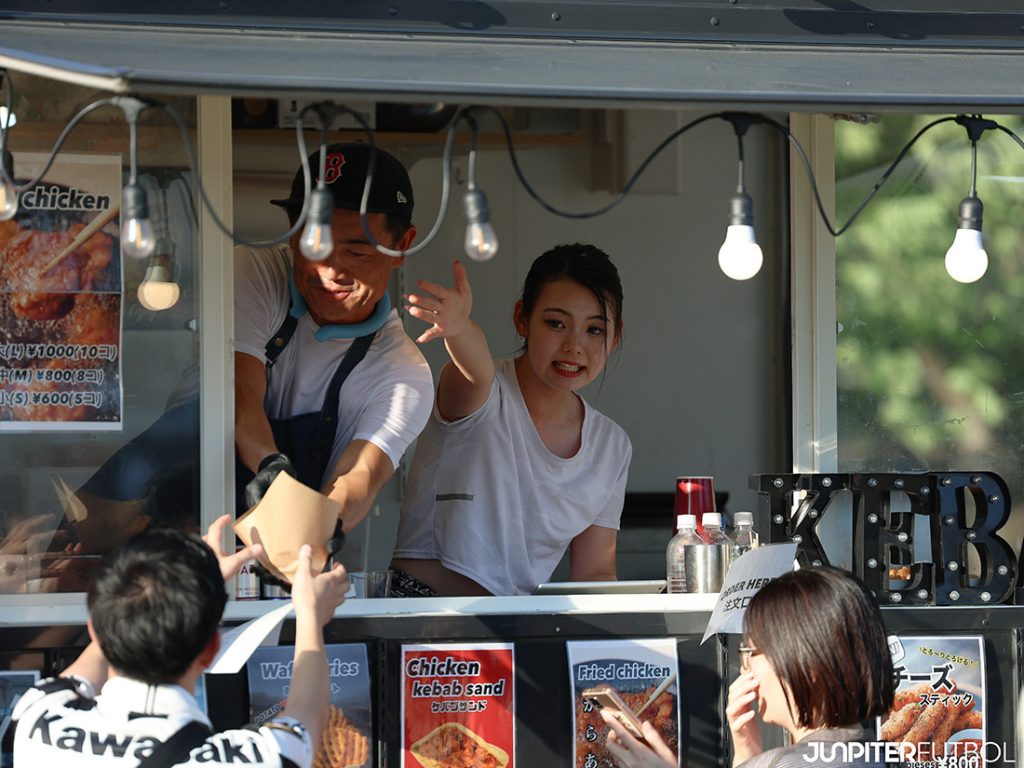
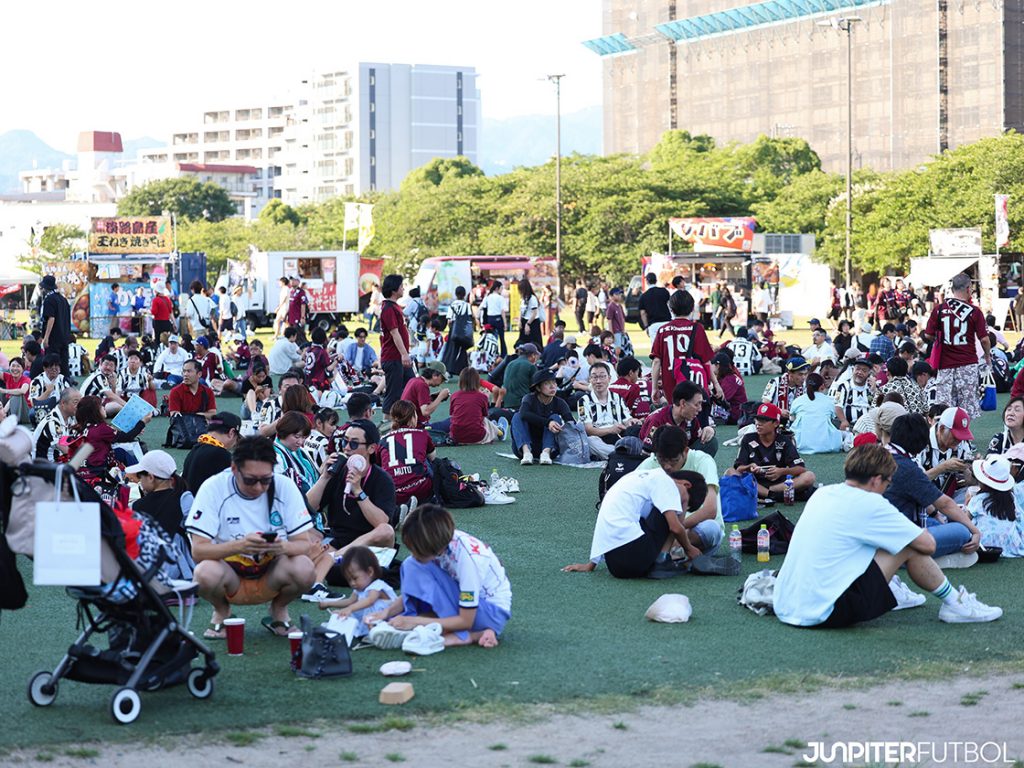
Outside Noevir Stadium, we also discovered a unique little setup that initially puzzled us. Just next to the main entrance was a compact park space, where about half the ground was laid with artificial turf, the kind we might use for futsal courts back home. As the evening drew nearer and the sun began to set, the picture became clear. Surrounding the turf in a U-shape formation were over 10 food trucks, offering everything from bentos to desserts and drinks. The artificial grass in the center wasn’t for play, it was a community picnic ground. Fans laid out mats, cracked open food truck store meals, and shared drinks with their families, friends, and fellow supporters. Naturally, we couldn’t resist joining in and sat down to enjoy a quick bento under the golden hour skies!
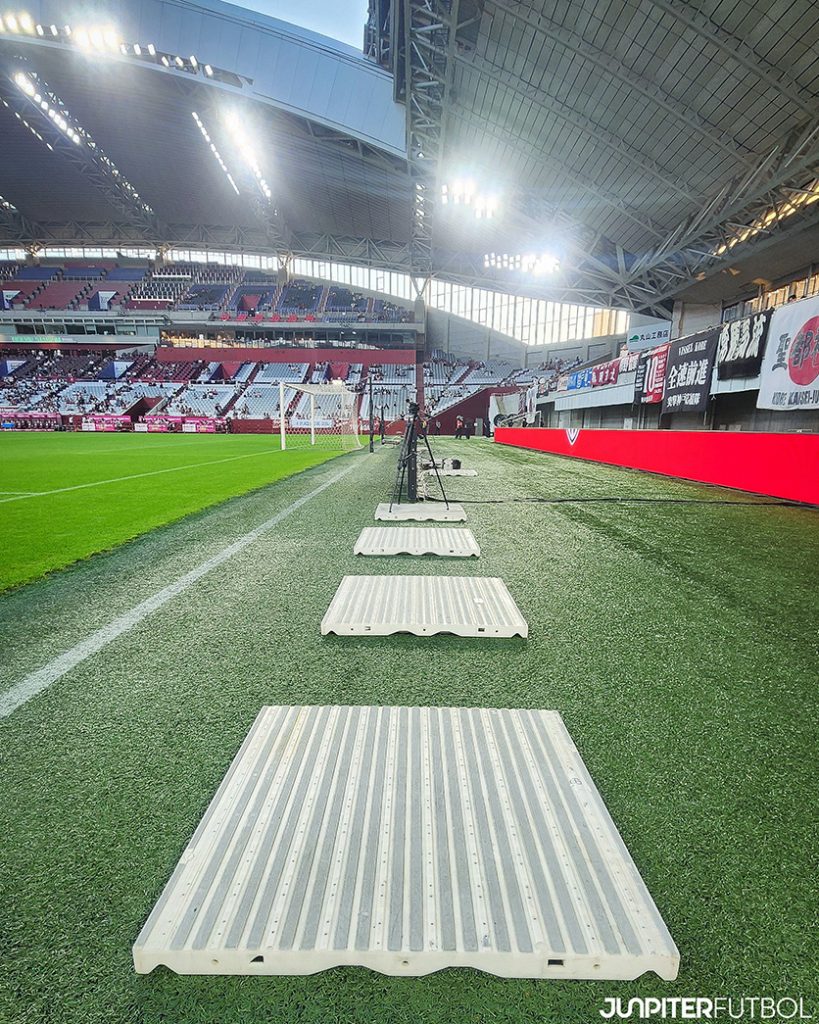
As a well-traveled football photojournalist, I’ve been pitchside at countless stadiums across Asia, but Noevir Stadium stood out for one very specific innovation: their “photographer platforms.” Typically, photographers just bring foldable stools or sit on the ground to shoot near the corner flags. But here, the organizers had installed 1m x 1m white elevated platforms across designated shooting positions. Each platform had a textured, non-slip surface and was filled with small, evenly spaced holes. At first, I thought they were for water drainage, but then I realized these were actually for monopods! The pointed ends of the monopods fit perfectly into the holes, providing rare stability when shooting. A half-meter gap between each platform ensured photographers had space to operate. It was thoughtful, practical, and so very Japanese. We even saw a note indicating the design was still pending patent, and honestly, it should be.
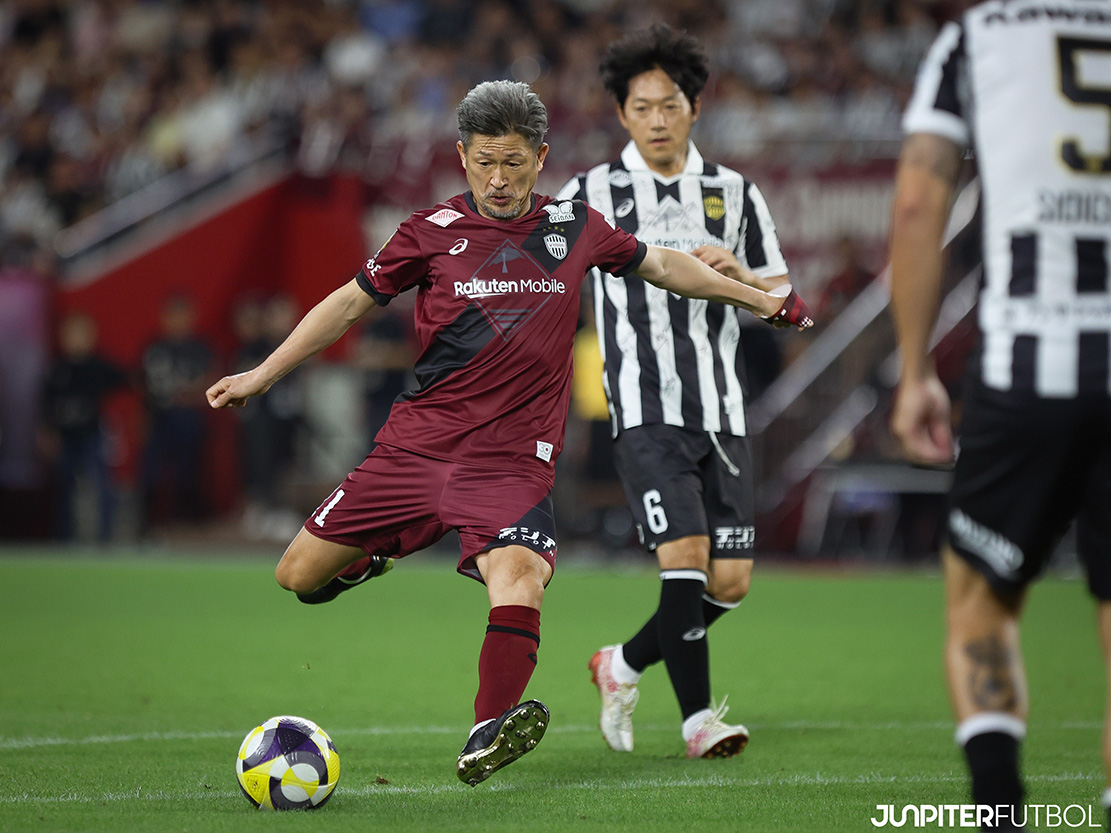
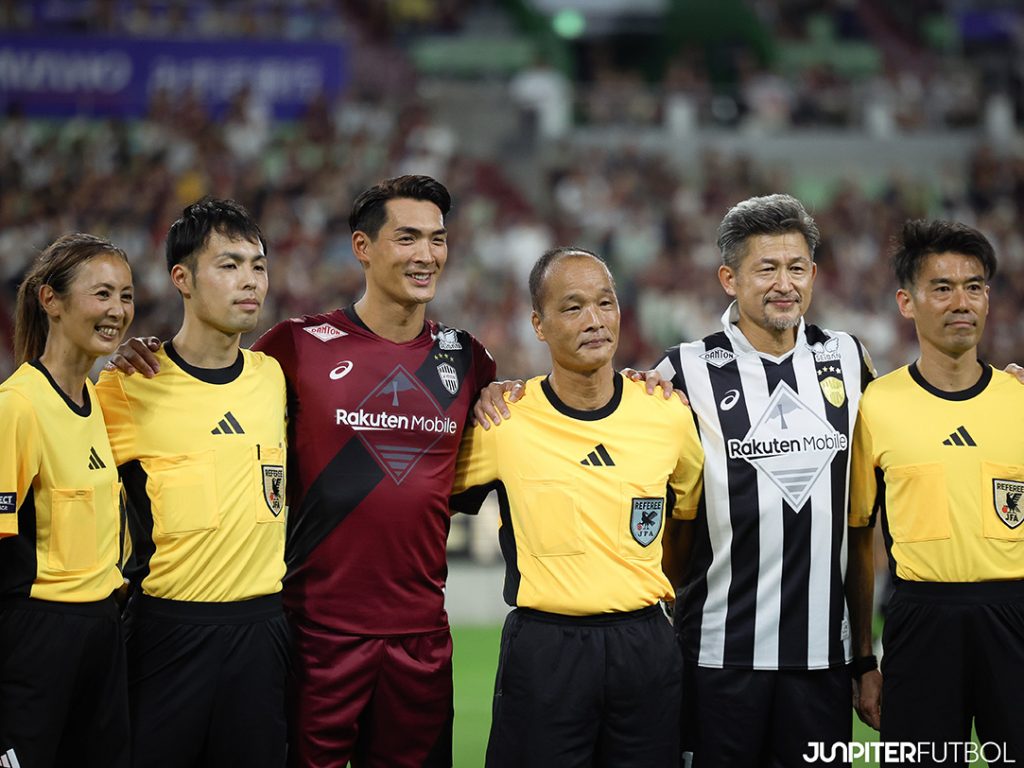
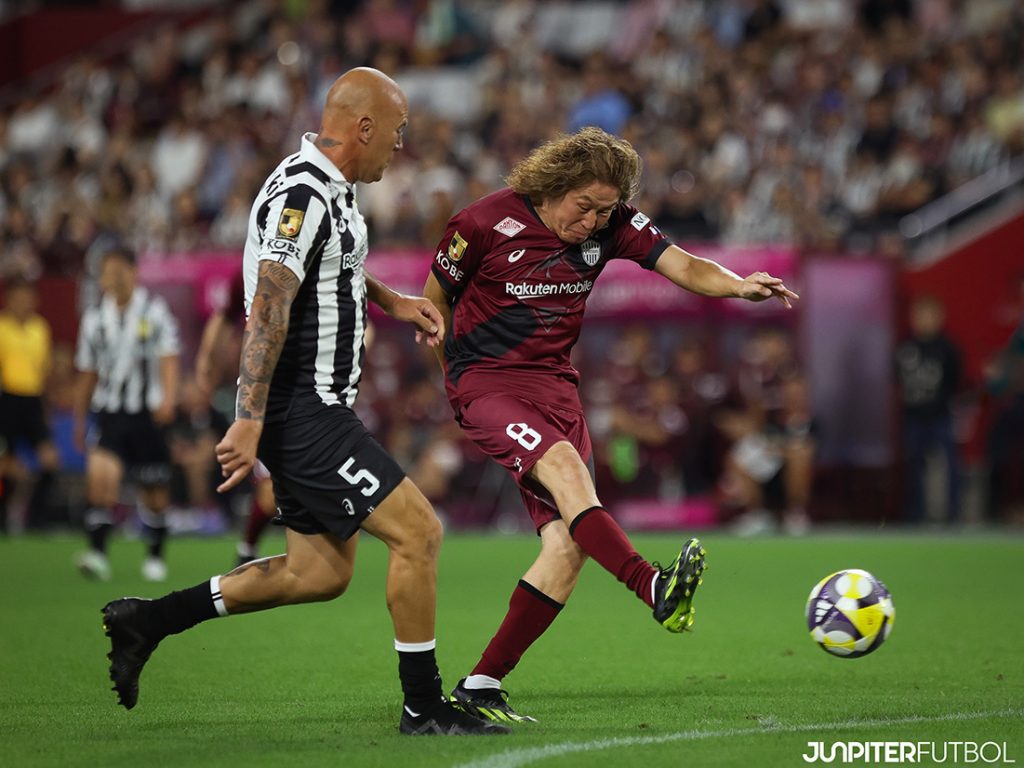
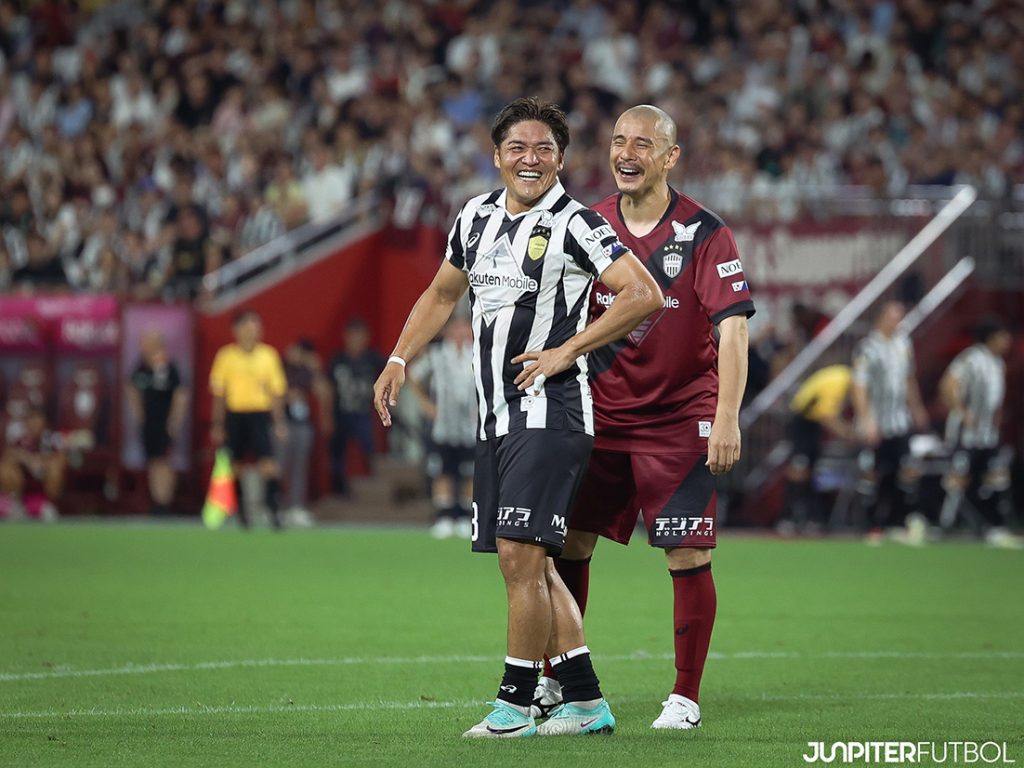
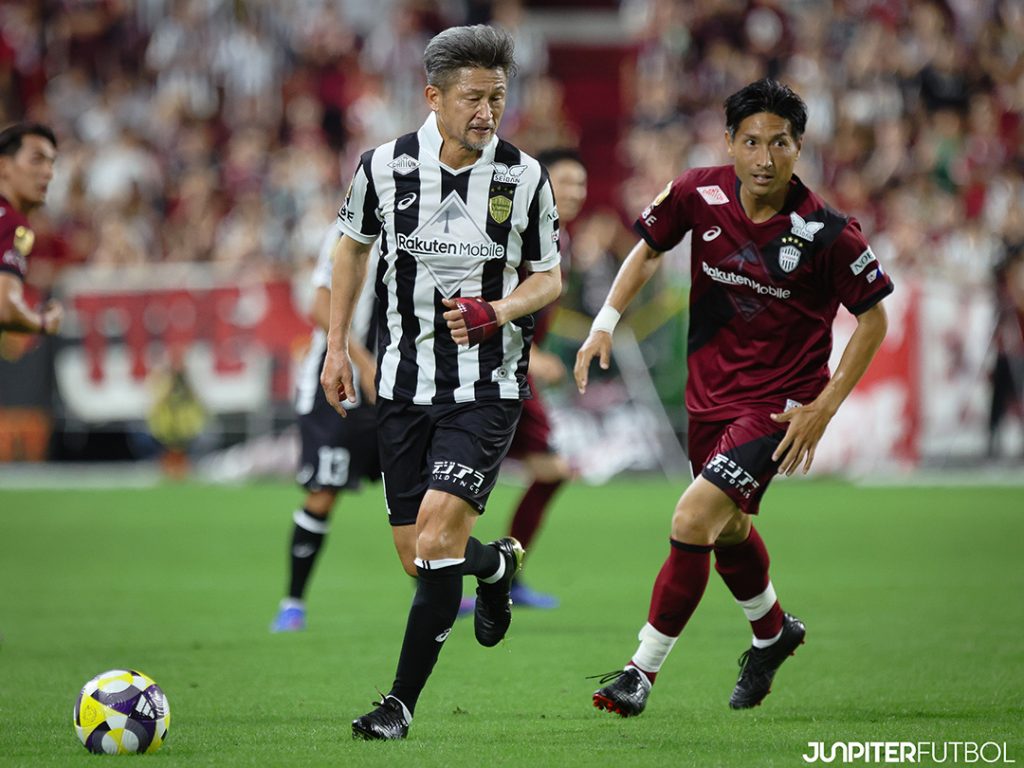
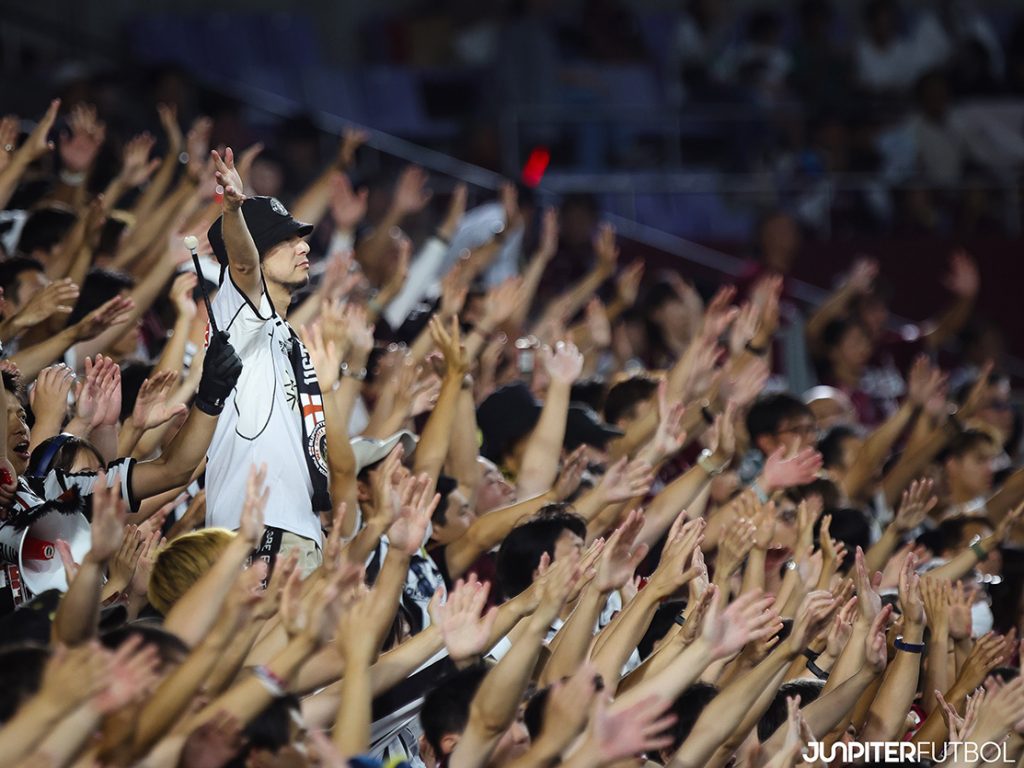
By the time the match kicked off, the stadium had filled to a crowd of about 18,000. You could sense the anticipation. For many in attendance, this was a chance to relive their childhood memories. Seeing familiar names back in Vissel Kobe colours – black and white stripes of the past, and later the signature Rakuten maroon, triggered waves of nostalgia. For us, it was the same. These were the players we once only saw on TV, and now here we were, photographing them live in Kobe.
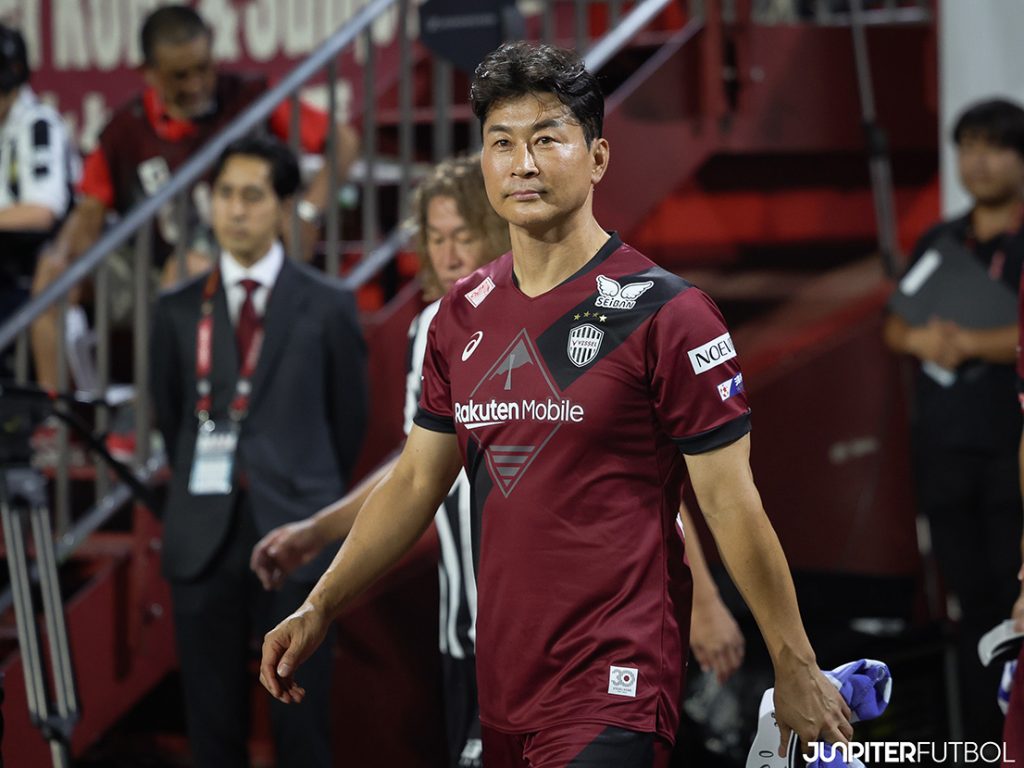
Some of the names that took the field needed no introduction. Masayuki Okano – remembered for scoring that iconic golden goal against Iran to send Japan to their first-ever FIFA World Cup in 1998, received one of the loudest cheers. Then there was Atsuhiro Miura, a midfield stalwart and two-time AFC Asian Cup winner. We spotted Tomoaki Makino, an AFC Champions League winner with Urawa Reds, and Yoshito Okubo, the former Japan international who also had a stint in the Bundesliga with Wolfsburg. Even Kim Do-Hoon, once Vissel Kobe’s forward and later head coach of Singapore’s Lion City Sailors, returned for the occasion.
But the true star of the night was none other than the legendary King Kazu – Kazuyoshi Miura. At 58 years old and still active in professional football, Kazu played with the energy of someone half his age and the class that made him a global icon. And fittingly, at the end of the night, he was named the Most Valuable Player (MVP) of the match, a recognition that drew loud applause and smiles all around.
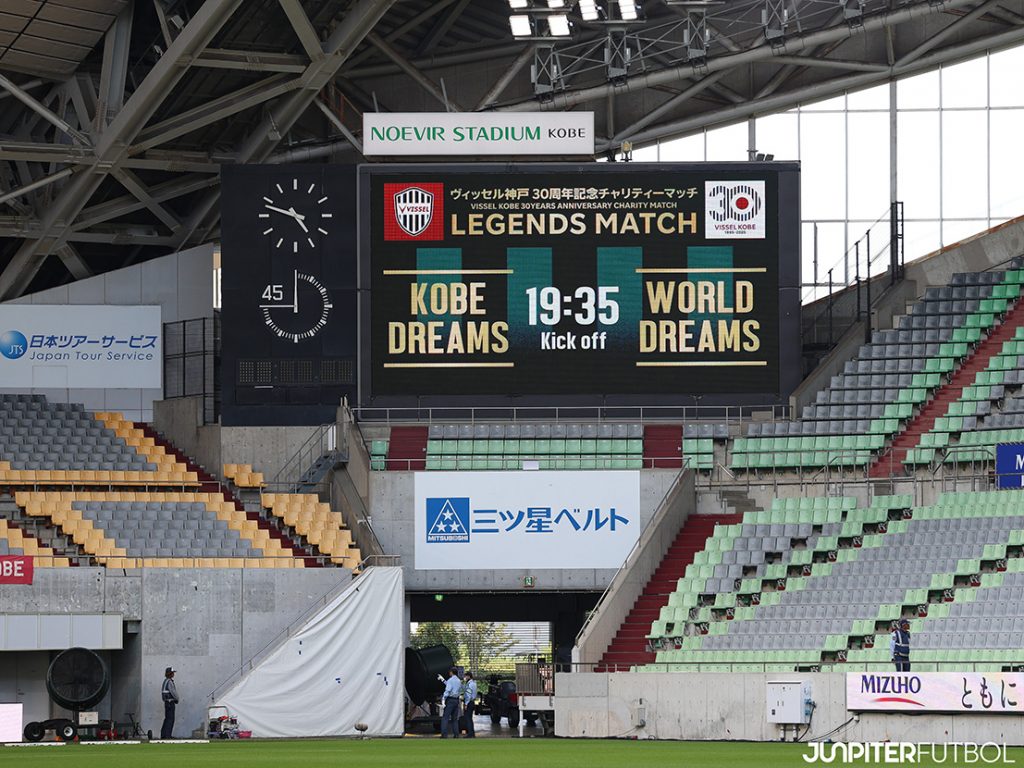
One name missing from the lineup, however, was Andrés Iniesta. Initially expected to feature, he had to pull out due to family matters. But in true classy fashion, he didn’t leave fans hanging. A pre-recorded video message from Iniesta was played on the stadium screens before kickoff, where he shared his love for the city, the club, and his regret for not being able to take part in this special match.
The match itself was fun and entertaining, a 30-minute-per-half affair where players were free to swap teams at halftime. Kobe Dreams and World Dreams took turns scoring, and in the end, it was the Kobe side that edged the game 4–3. There were flicks, cheeky backheels, slow-motion sprints, and lots of laughs. The crowd loved it. The players looked like they were having as much fun as the fans, maybe even more.
After the final whistle, as fans slowly trickled out under the warm summer night sky, we made our way to the mixed zone and managed to grab a quick word with King Kazu. Just a short chat, but for someone who has admired him for decades, it was enough to make this trip truly unforgettable.
As we packed our gear and left the stadium, one thought kept coming back: this night was about more than football. It was about remembering the past, honouring those we lost, and celebrating the power of sport to bring people together. For those 18,000 fans in the stands, and for us, it felt like we had stepped back in time, to that moment 20 or 30 years ago when we first fell in love with J.League football.
And in a way, that’s exactly what made it so special.
Thank you Vissel Kobe for having us. Special mention to SingaCup, Asia’s Premier International Youth Football Tournament, for making this trip possible.

Happy
0 %

Sad
0 %

Excited
0 %

Sleppy
0 %

Angry
0 %

Surprise
0 %
Please follow and like us:



One thought on “A Night to Remember at Noevir Stadium: Football, Nostalgia, and Kobe’s Resilient Spirit”
Comments are closed.